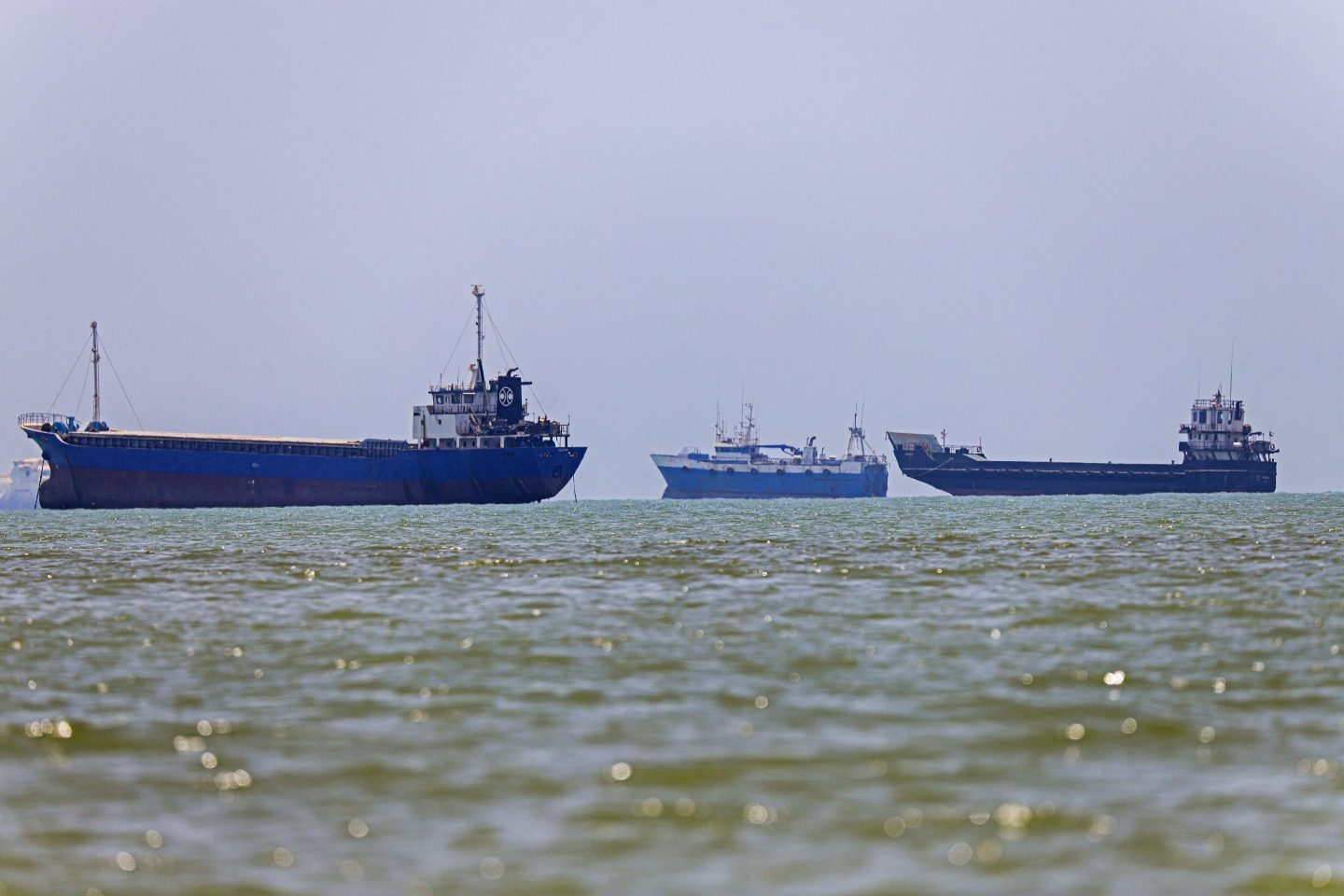
Oil prices are retreating toward levels not seen since before the Iran conflict began in February, as Gulf shipping lanes reopen and markets reprice the geopolitical risk premium that has dominated energy trading for months. The move is significant, but far from clean: Iran’s Revolutionary Guards Corps is already warning vessels against transiting the Strait of Hormuz without Tehran’s explicit approval, injecting fresh uncertainty into a recovery that remains fragile at its core.
A Market Repricing Four Months in the Making
The Iran conflict, which erupted in February 2026, sent oil prices sharply higher as traders priced in potential disruptions to the Strait of Hormuz, the chokepoint through which roughly 20% of global oil supply transits daily. The risk premium embedded in crude benchmarks has been substantial. Now, with Gulf shipping resuming and a preliminary memorandum of understanding reportedly in place, that premium is unwinding.
The New York Times reported Wednesday that prices are moving closer to pre-war levels, a directional signal that energy markets are beginning to treat the worst-case supply disruption scenario as less probable. For consumers, that translates into downward pressure on gasoline prices at a time when inflation remains a persistent concern. For energy equities, the picture is considerably more complicated.
As we outlined in our recent analysis of the Dow futures slide and Hormuz threats, the market’s sensitivity to any signal from the strait remains acute. Wednesday’s price action confirms that sensitivity runs in both directions.

Iran’s IRGC Injects a Critical Caveat
The recovery narrative is not without its fault lines. Iran’s IRGC Navy issued a pointed warning Wednesday, stating that any new Hormuz shipping route announced without coordination with Tehran is, in their words, “unacceptable and dangerous.” The Guards Corps added that all vessels must contact IRGC authorities before transiting, a demand that effectively asserts Iranian veto power over one of the world’s most critical maritime corridors.
CNBC reported the warning in detail, noting that the language signals Tehran is not prepared to cede operational control over Hormuz traffic even as diplomatic channels remain open. The underlying risk here is a scenario where a single incident involving an IRGC interdiction of a non-compliant vessel reignites the risk premium almost overnight.
- Strait of Hormuz throughput: Approximately 20% of global oil supply passes through the strait, making it the single most consequential maritime chokepoint for energy markets.
- IRGC warning scope: The Guards Corps specifically flagged new alternative routing announcements made without Tehran’s coordination as triggering potential enforcement action.
- Price direction: Crude benchmarks are moving toward pre-February 2026 levels, according to reporting from the New York Times, though specific price levels were not confirmed in available sources.
- MOU status: A fragile memorandum of understanding appears to underpin the current de-escalation, per CNBC reporting, though its terms have not been publicly disclosed.
Energy Equities, Inflation, and the Forward Calculus
Lower oil prices carry a dual market impact. On the consumer side, relief at the pump supports discretionary spending and eases headline inflation, giving the Federal Reserve marginally more room to assess its rate trajectory without an energy-driven inflation spike complicating the picture. As we have covered extensively in our analysis of the Fed’s hawkish shift under Chair Warsh, the central bank is already navigating a difficult inflation environment. A sustained decline in energy costs would represent a meaningful tailwind for the disinflation case.
For energy sector equities, the calculus runs the other way. Integrated oil majors and upstream producers that benefited from elevated prices during the conflict period face margin compression as benchmarks retreat. Refining margins, which expanded sharply during the supply disruption, are also likely to normalize. Investors positioned long energy on the geopolitical trade will be reassessing exposure.
Shipping and logistics equities present a more nuanced picture. The resumption of Gulf routes reduces the cost premium associated with longer alternative voyages around the Cape of Good Hope, which some operators had adopted during peak disruption. Lower freight costs benefit energy-intensive industries broadly, but carriers that captured elevated day rates during the disruption period will see those tailwinds fade.
What this signals for the broader market is a tentative shift from risk-off to a more neutral positioning on the geopolitical front. The critical variable remains Iran’s willingness to allow unimpeded transit. Any escalation from the IRGC, whether a vessel seizure or a formal closure announcement, would reverse the current repricing rapidly. Markets are not fully discounting that tail risk, and they should not be.
Watch for further developments in the U.S.-Iran diplomatic channel, any formal clarification of the Hormuz transit protocol, and weekly U.S. crude inventory data from the EIA, which will provide the next hard data point on whether the supply picture is genuinely normalizing or merely pausing.
Frequently Asked Questions about Oil Prices and the Strait of Hormuz
Why are oil prices falling toward pre-war levels right now?
Gulf shipping lanes are resuming following a fragile de-escalation in the Iran conflict that began in February 2026. As the perceived risk of a major supply disruption through the Strait of Hormuz decreases, traders are unwinding the geopolitical risk premium that had been built into crude prices over the past several months. The New York Times reported Wednesday that prices are moving closer to pre-conflict levels as a result.
What is the Strait of Hormuz and why does it matter so much to oil markets?
The Strait of Hormuz is a narrow waterway between Iran and Oman connecting the Persian Gulf to the Arabian Sea. Roughly 20% of global oil supply transits through it daily, making it the world’s single most critical energy chokepoint. Any credible threat to close or restrict the strait immediately triggers sharp moves in global crude benchmarks, as markets price in potential supply shortfalls.
What exactly did Iran’s IRGC warn on Wednesday?
Iran’s Revolutionary Guards Corps Navy warned that any new Hormuz shipping route announced without coordination with Tehran is “unacceptable and dangerous.” The IRGC stated that all vessels must contact IRGC authorities before transiting the strait. According to CNBC, this warning was directed at alternative routing announcements made without Tehran’s approval, effectively asserting Iranian oversight over Hormuz traffic even as diplomatic talks continue.
How does lower oil price affect inflation and Federal Reserve policy?
A sustained decline in crude prices reduces energy costs across the economy, exerting downward pressure on headline inflation. This gives the Federal Reserve additional analytical room as it weighs its rate decisions. Under Chair Kevin Warsh, the Fed has signaled a hawkish posture amid persistent inflation. A meaningful and durable drop in energy prices would support the disinflation narrative, though the Fed is unlikely to alter its trajectory based on a single commodity move alone.
What are the key risks that could reverse the current oil price decline?
The primary risk is a breakdown in the fragile diplomatic framework currently underpinning Gulf shipping resumption. A single incident involving an IRGC interdiction of a vessel transiting without Tehran’s approval could rapidly reignite the geopolitical risk premium. Additional risks include a collapse of the reported memorandum of understanding, broader regional escalation, or a formal Iranian announcement restricting Hormuz transit. Investors should monitor IRGC communications, U.S.-Iran diplomatic signals, and EIA weekly inventory data closely.
Stay ahead of the markets. Every day, LeGrebe delivers expert financial analysis on the trends and decisions shaping the North American and global economy , in under 5 minutes.
