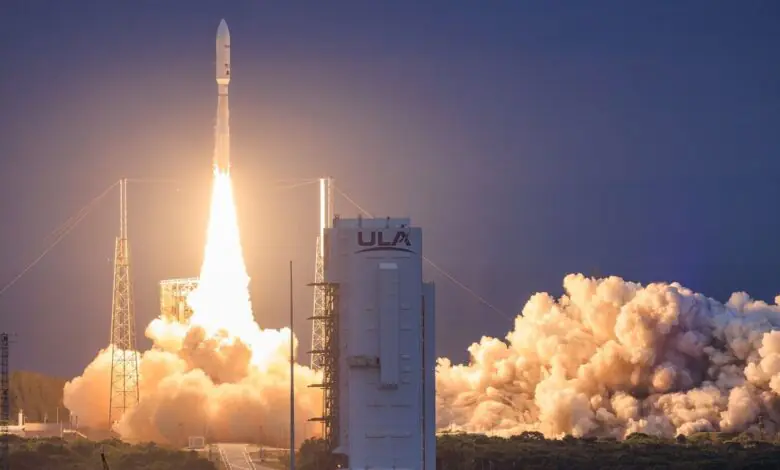
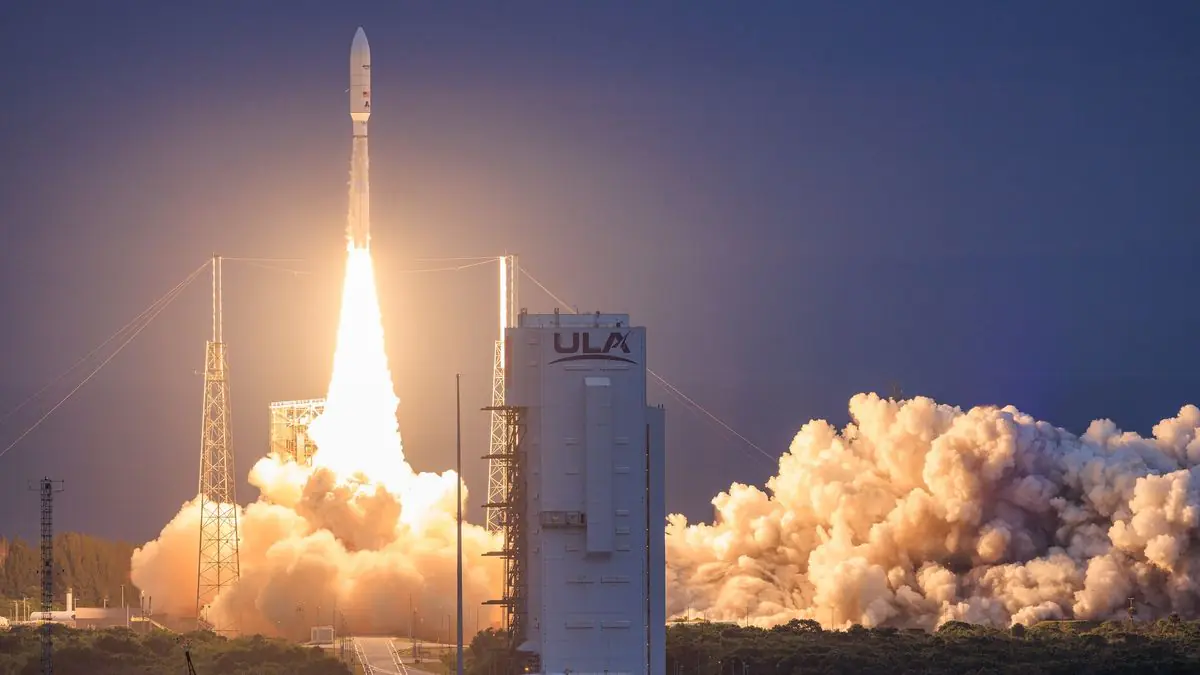
A United Launch Alliance Atlas V rocket carried 29 Amazon Leo broadband satellites to orbit from Cape Canaveral in the early hours of July 2, 2026, marking another significant escalation in the commercial low-Earth orbit internet race. The launch comes as SpaceX simultaneously deployed 24 additional Starlink satellites from Vandenberg Space Force Base, compressing what was once a leisurely competitive timeline into a near-daily sprint for orbital dominance.
The Commercial Space Race Enters Its Most Intensive Phase
The dual launches within hours of each other are not coincidental optics. They reflect a structural shift in the satellite broadband market, where Amazon’s Project Kuiper and SpaceX’s Starlink are now deploying infrastructure at a pace that would have seemed implausible five years ago. Florida’s Space Coast reportedly recorded a record-breaking launch cadence this week, according to reporting from The News International, underscoring how rapidly the commercial space economy has industrialized.
For investors tracking the aerospace and telecommunications sectors, the competitive dynamics here carry material implications. Amazon (NASDAQ: AMZN) has committed tens of billions of dollars to Project Kuiper, framing satellite broadband as a critical long-term revenue pillar alongside AWS and its advertising business. The ability to deploy 29 satellites per Atlas V mission signals that Amazon’s supply chain and manufacturing pipeline are now operating at scale.
Key Data Points From This Week’s Launches
- Amazon Leo Mission: 29 broadband satellites deployed to low-Earth orbit aboard a ULA Atlas V rocket from Cape Canaveral, Florida, on July 2, 2026.
- SpaceX Starlink: 24 additional Starlink satellites launched on a Falcon 9 from Vandenberg Space Force Base on July 1, 2026, under the Starlink 17-46 mission designation.
- Launch cadence: Florida’s Space Coast recorded what sources describe as a record-breaking launch frequency this week, reflecting the industrialization of orbital deployment.
- Atlas V role: ULA’s Atlas V, a proven heavy-lift vehicle, continues to serve as Amazon’s primary delivery mechanism for Kuiper constellation buildout ahead of ULA’s next-generation Vulcan Centaur transition.
The financial stakes extend well beyond the launch vehicles themselves. Analysts tracking the global satellite internet addressable market estimate it in the hundreds of billions of dollars over the next decade, with underserved rural and maritime connectivity representing the core demand driver. Amazon’s entry directly challenges Starlink’s first-mover advantage, which SpaceX has leveraged to sign contracts with airlines, maritime operators, and government agencies globally.


Investment Implications and the Broader Economic Stakes
For Amazon shareholders, Project Kuiper represents both a capital allocation risk and a potential long-term monetization engine. The company has not yet disclosed detailed revenue projections for Kuiper, but the scale of satellite deployment suggests Amazon is treating this as a strategic infrastructure bet comparable to the early buildout of AWS. As we outlined in our recent analysis of the $1 trillion AI investment boom and its parallels to the dotcom era, large-scale capital commitments in transformative technology carry both asymmetric upside and the risk of overcapitalization if monetization timelines slip.
ULA, a joint venture between Boeing (NYSE: BA) and Lockheed Martin (NYSE: LMT), benefits directly from Amazon’s launch contracts, providing a revenue backstop as it navigates the transition to its Vulcan Centaur rocket. Boeing, under continued financial pressure, has particular interest in ULA’s contract pipeline remaining robust.
SpaceX, still privately held, continues to set the competitive benchmark. Starlink’s operational constellation now numbers in the thousands of satellites, giving it a service coverage and latency advantage that Amazon will need years of sustained deployment to match. The speed at which Amazon closes that gap will be a key metric for institutional investors assessing the long-term viability of Kuiper as a competitive product.
The regulatory dimension also warrants attention. The Federal Communications Commission oversees spectrum allocation and orbital slot licensing, and as constellation sizes grow, interference management and space debris mitigation are becoming live policy debates. Any regulatory friction in the United States or internationally could affect deployment timelines and, by extension, capital expenditure forecasts for both Amazon and SpaceX’s commercial rivals.
Watch for Amazon’s next quarterly earnings call for any updated Kuiper deployment milestones or capital expenditure guidance. ULA’s transition to Vulcan Centaur and its manifest for future Kuiper missions will also be a signal of how aggressively Amazon intends to compress the constellation buildout timeline in the second half of 2026.
Frequently Asked Questions about Amazon Kuiper and the Satellite Broadband Race
What is Amazon’s Project Kuiper and why does it matter financially?
Project Kuiper is Amazon’s initiative to build a low-Earth orbit satellite constellation designed to provide global broadband internet access. Amazon has committed billions of dollars to the project, viewing it as a long-term revenue stream that complements its cloud and e-commerce businesses. The addressable market for satellite broadband, particularly in underserved regions, is estimated in the hundreds of billions of dollars globally over the next decade, making Kuiper a significant long-term capital allocation bet for Amazon shareholders.
How does Amazon’s Kuiper compare to SpaceX’s Starlink today?
Starlink currently holds a substantial first-mover advantage, with a constellation numbering in the thousands of satellites already in orbit and an active commercial customer base spanning consumers, airlines, maritime operators, and government agencies. Amazon’s Kuiper is still in its constellation buildout phase, meaning it has not yet achieved the coverage density required for full commercial service. The July 2 launch of 29 satellites is part of an accelerating deployment schedule, but Amazon will need sustained high-cadence launches over several years to close the gap with Starlink.
What is the significance of ULA’s Atlas V rocket for this mission?
The Atlas V is a proven, reliable heavy-lift launch vehicle operated by United Launch Alliance, a joint venture of Boeing and Lockheed Martin. Amazon has contracted ULA for multiple Kuiper launches, providing ULA with a significant revenue stream as it transitions to its next-generation Vulcan Centaur rocket. For Boeing in particular, ULA’s contract pipeline with Amazon offers a stable revenue contribution at a time when Boeing’s core commercial aviation business remains under financial pressure.
What risks should investors in Amazon watch regarding Project Kuiper?
The primary risks are capital intensity and monetization timeline. Amazon has not publicly disclosed detailed revenue projections for Kuiper, and the buildout requires sustained multi-billion-dollar capital expenditure before the constellation reaches commercial-grade coverage. Regulatory risks around spectrum allocation and space debris policy could also affect deployment timelines. If monetization lags behind the capital outlay, Kuiper could weigh on Amazon’s free cash flow profile and compress near-term earnings multiples.
What key milestones should investors monitor in the coming months?
The most important near-term indicators are Amazon’s quarterly earnings disclosures for any Kuiper-specific capital expenditure guidance or deployment milestones, ULA’s published launch manifest for future Kuiper missions, and any FCC or international regulatory decisions on spectrum and orbital slot allocations. Progress toward commercial service availability, which Amazon has targeted for eligible customers, will be the ultimate test of whether Kuiper can begin generating revenue to offset its substantial infrastructure investment.
Stay ahead of the markets. Every day, LeGrebe delivers expert financial analysis on the trends and decisions shaping the North American and global economy , in under 5 minutes.